Shijiazhuang West Yosen International Trading Co., Ltd.

2-inch (50 mm) coil nails: which wooden pallets they suit and which they don't

Table of Content [Hide]

    In automated wooden pallet manufacturing, coil nail length directly affects the stability of the finished pallet. Nails that are too short cause nail pullout and loose pallets; nails that are too long punch through stringers and can damage the goods on top. This article focuses on one size only — the 2-inch (50 mm) coil nail, a high-volume fastener widely used in pallet factories — and on the pallet types where it fits and the ones where it does not.

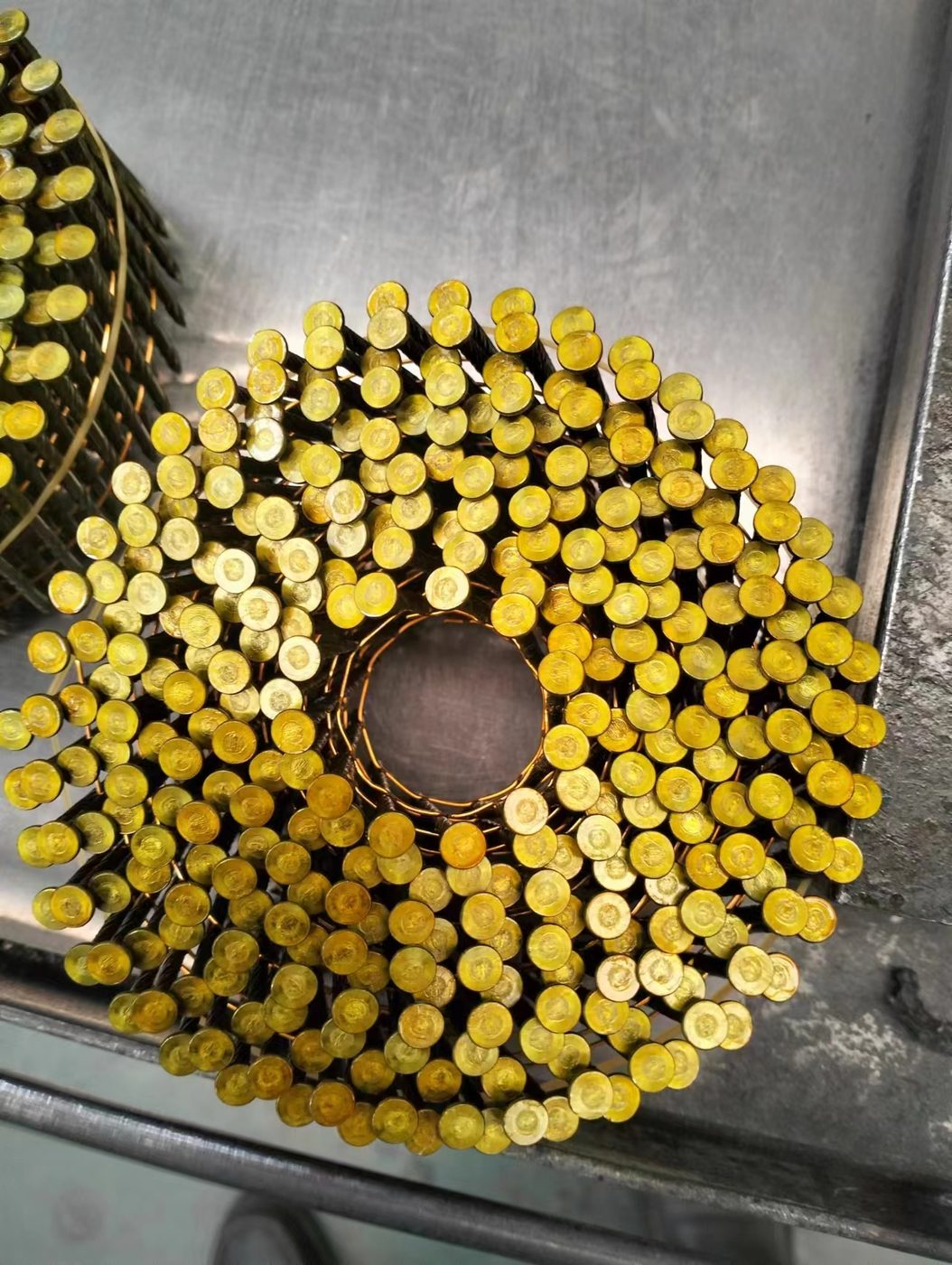
    West Yosen manufactures its coil nails in-house: the steel wire is formed, coated, collated and packed on site.

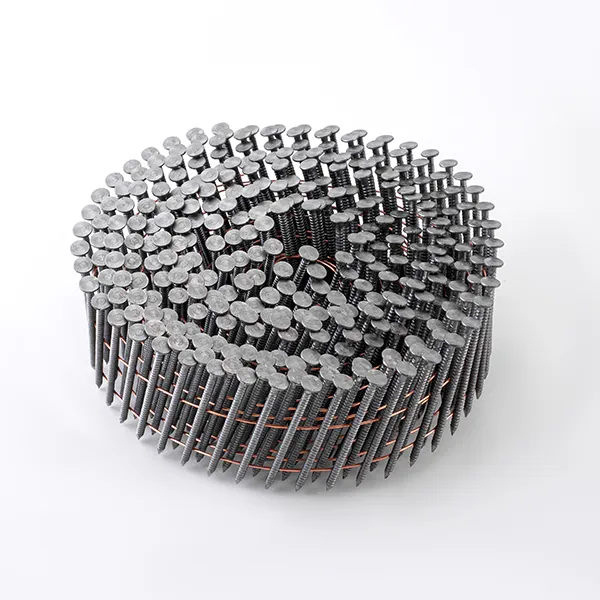
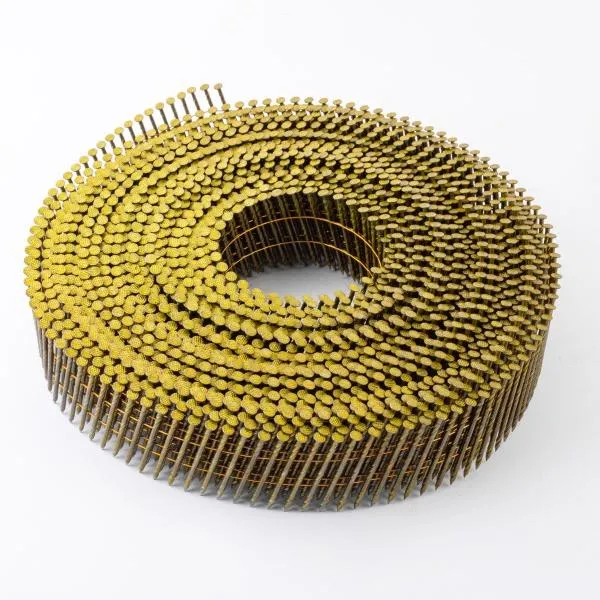
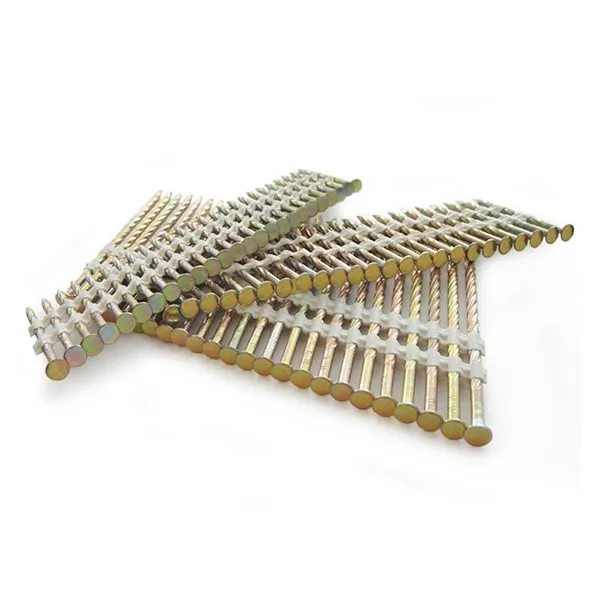
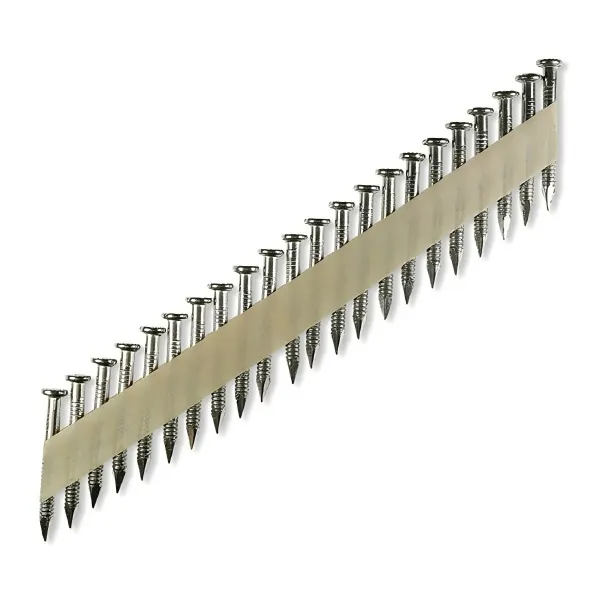
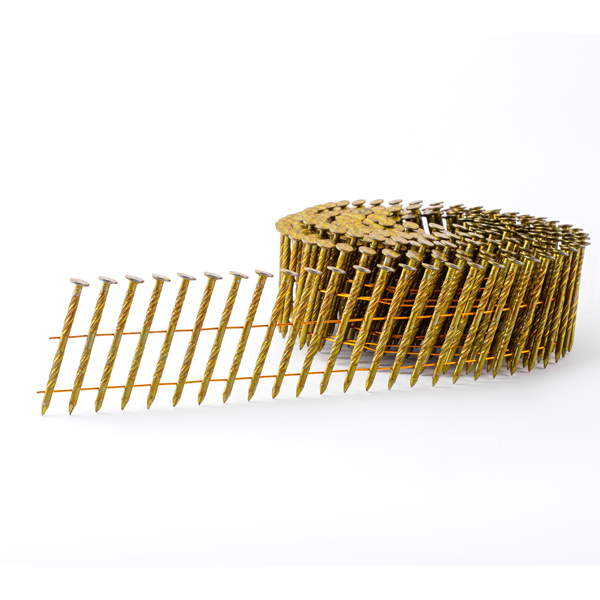
    Coil of 2-inch (50 mm) coil nails with brass-coloured heads

    Why nail length decides pallet stability

    A 50 mm coil nail needs enough shank length to pass through the top deck board and still leave a useful hold inside the stringer or block. If the nail ends too close to the deck board, there is not enough embedment, and the joint works loose under repeated handling. If it is too long for the timber, the point exits the bottom of the stringer — that is a penetration problem rather than a fixing.

    In terms of board thickness, a 50 mm coil nail works for pallets with 15-18 mm top deck boards paired with 22-28 mm stringers or blocks. After penetrating the deck board, the nail keeps sufficient embedment depth inside the timber to deliver strong holding power without excessive penetration out of the bottom. Use the pallet coil nail size specifications as a reference when you compare this length against other sizes.

    Pallet types that suit 50 mm coil nails

    General-purpose domestic storage-cycle pallets. Popular outer dimensions are 1200×1000 mm, 1100×1100 mm and 1200×800 mm — non-EPAL standard pallets. With 15-18 mm deck boards and 22-28 mm stringers, they suit light-to-medium-duty loads with a dynamic load capacity of 800-1200 kg, for domestic warehouse circulation and general cargo shipment.

    Export-grade IPPC heat-treated simple pallets. These are simplified export pallets shipped to South America, Africa and other markets with thinner deck boards: 15-18 mm deck boards and blocks under 25 mm thick. Smooth-shank or screw-thread coil nails support mass-production for these pallets, and they work with 15-degree pneumatic coil nailers for high-speed production while meeting IPPC export-packaging requirements.

    Repair and refurbishment of used pallets. For repairing 15-18 mm worn deck boards on second-hand pallets, 50 mm coil nails are an optimal choice. Aged timber often contains cracks and voids. Annular-thread coil nails deliver higher pullout resistance and reduce the risk of re-loosening.

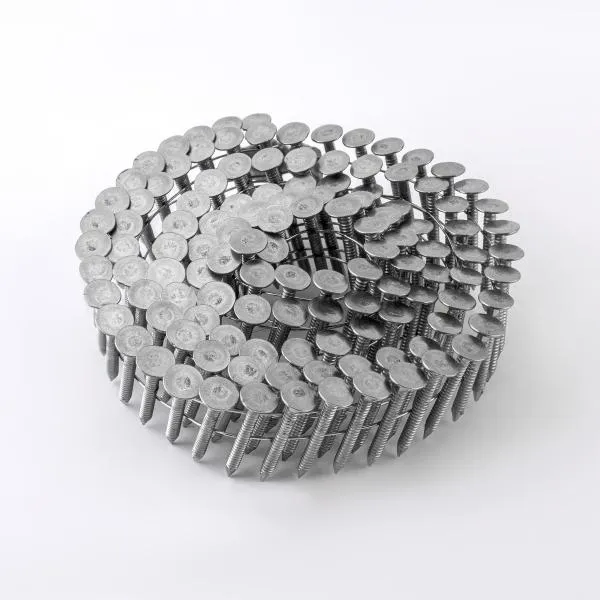
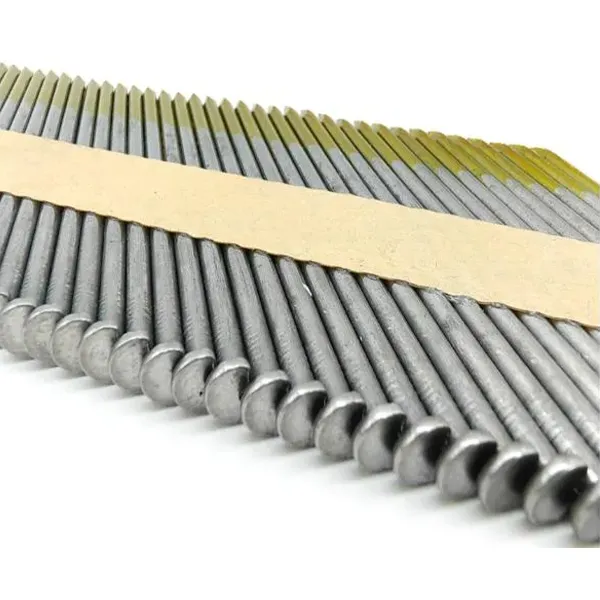
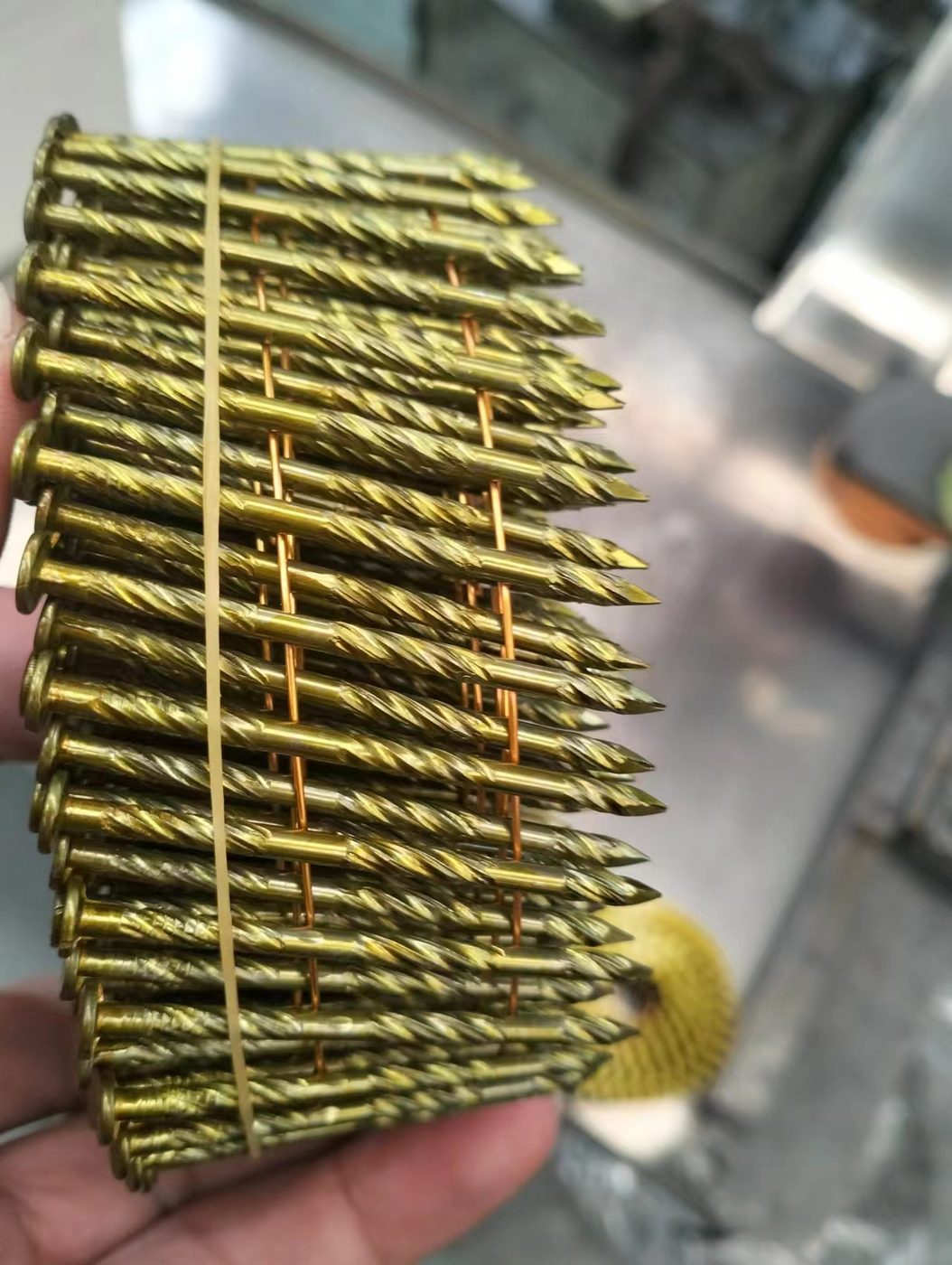
    Screw-shank 2-inch coil nails held in hand

    Where 50 mm coil nails don't fit

    Heavy-duty thick-board pallets. Where deck boards are ≥20 mm and stringers or blocks are ≥30 mm, with loads above 1.5 tons, use 57-70 mm coil nails instead.

    EPAL-approved euro-pallets. EPAL pallets commonly use 22-24 mm thick timber and require 57-64 mm or longer nails. A 50 mm nail does not have sufficient holding power to meet EPAL requirements, so 50 mm coil nails are not recommended for EPAL-certified pallets.

    Heavy-equipment pallets with thick timber components. With thick timber there is a risk of full penetration and exposed nail tips.

    Choosing the right shank for the job

    Shank diameter for this size is typically 2.1-2.5 mm, and the three main shank styles behave differently depending on the timber they are driven into:

    Shank typeSuits timber conditionPullout resistanceTypical use
    Smooth-shankDry new lumberStandardCost-effective, high-volume production of new pallets
    Annular-threadMoist timber, aged or cracked timberHigherPallet repair and joints that stay tight through repeated circulation
    Screw-threadMoist timber, aged or cracked timberHigherMass-production export pallets and repair work where holding power matters

    The table is a starting point rather than a fixed rule. Smooth-shank nails are the lower-cost option when the lumber is dry and new, which covers most new-build production. Annular-thread and screw-thread variants trade a little more cost for pullout resistance, which matters when the timber is moist, when boards contain cracks and voids, or when a pallet is being repaired rather than built new.

    A practical embedment rule

    For the joint to hold, the shank needs to end up well embedded in the stringer or block, and around 25-30 mm is the working figure. To check any nail against a given pallet, subtract the deck-board thickness from the total nail length; the remainder is the shank length available for the stringer. Use this rule-of-thumb for purchasing and for production-site judgement. If you are weighing coil-fed against strip-fed tooling on the same line, see coil nails vs strip nails.

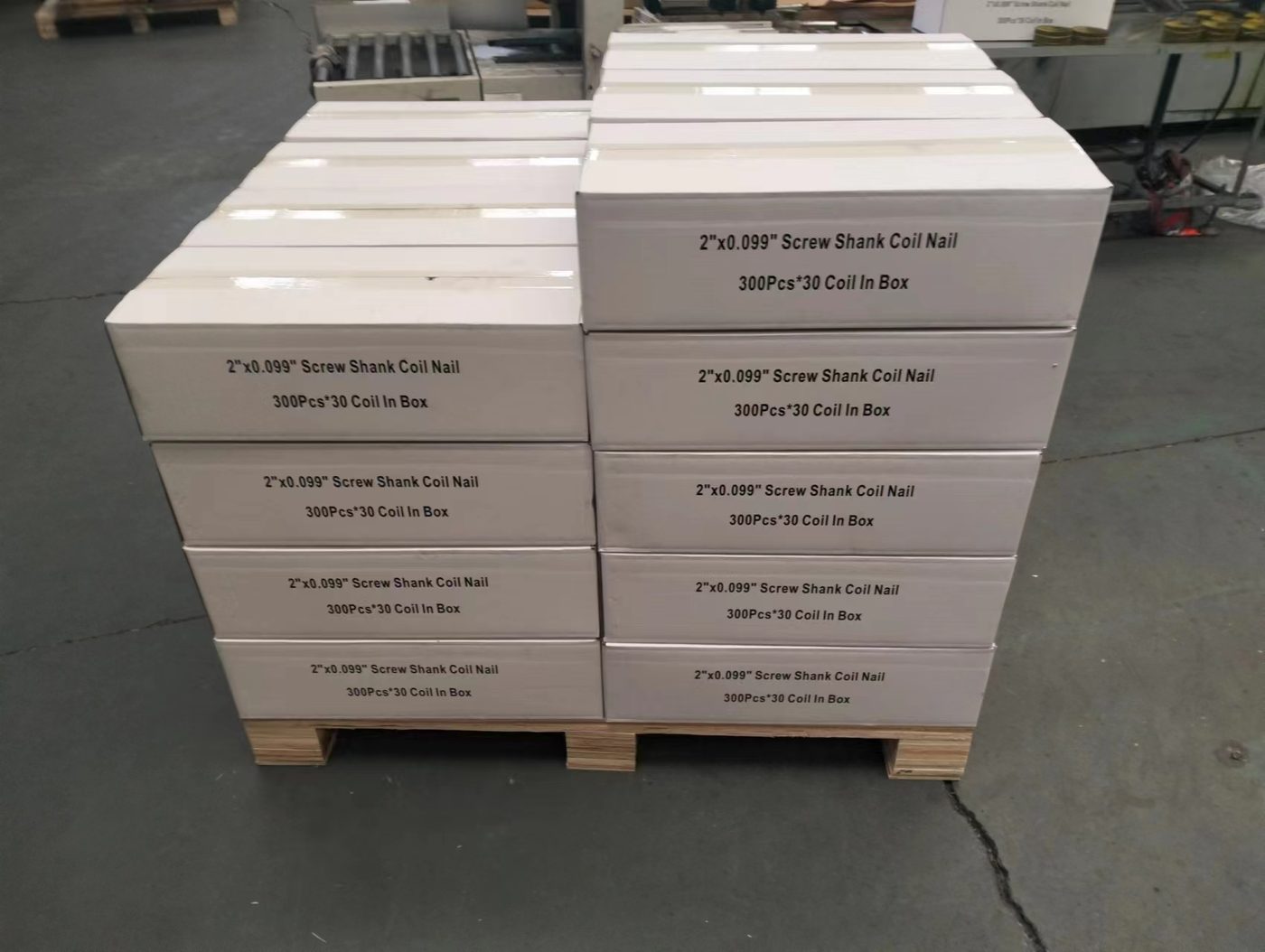
    Cartons of 2-inch coil nails stacked on a wooden pallet

    Summary

    2-inch (50 mm) coil nails are a good match for light-to-medium-duty ordinary wooden pallets with 15-18 mm deck boards, for simple IPPC export pallets, and for used-pallet repair work. Common pallet sizes include the non-EPAL formats 1100×1100 mm, 1200×1000 mm and 1200×800 mm. For EPAL-certified pallets or heavy-duty thick-timber pallets, select longer-length coil nails instead. For a closer look at how these lengths fit into a wider range, see the buyer's guide to 15-degree coil nails for pallet manufacturing.

    References
    PREVv: No information